The Bigger the Failure, the Easier the Fix
.summary {In software, the biggest failures can sometimes be the easiest to fix.
} .category {Technical
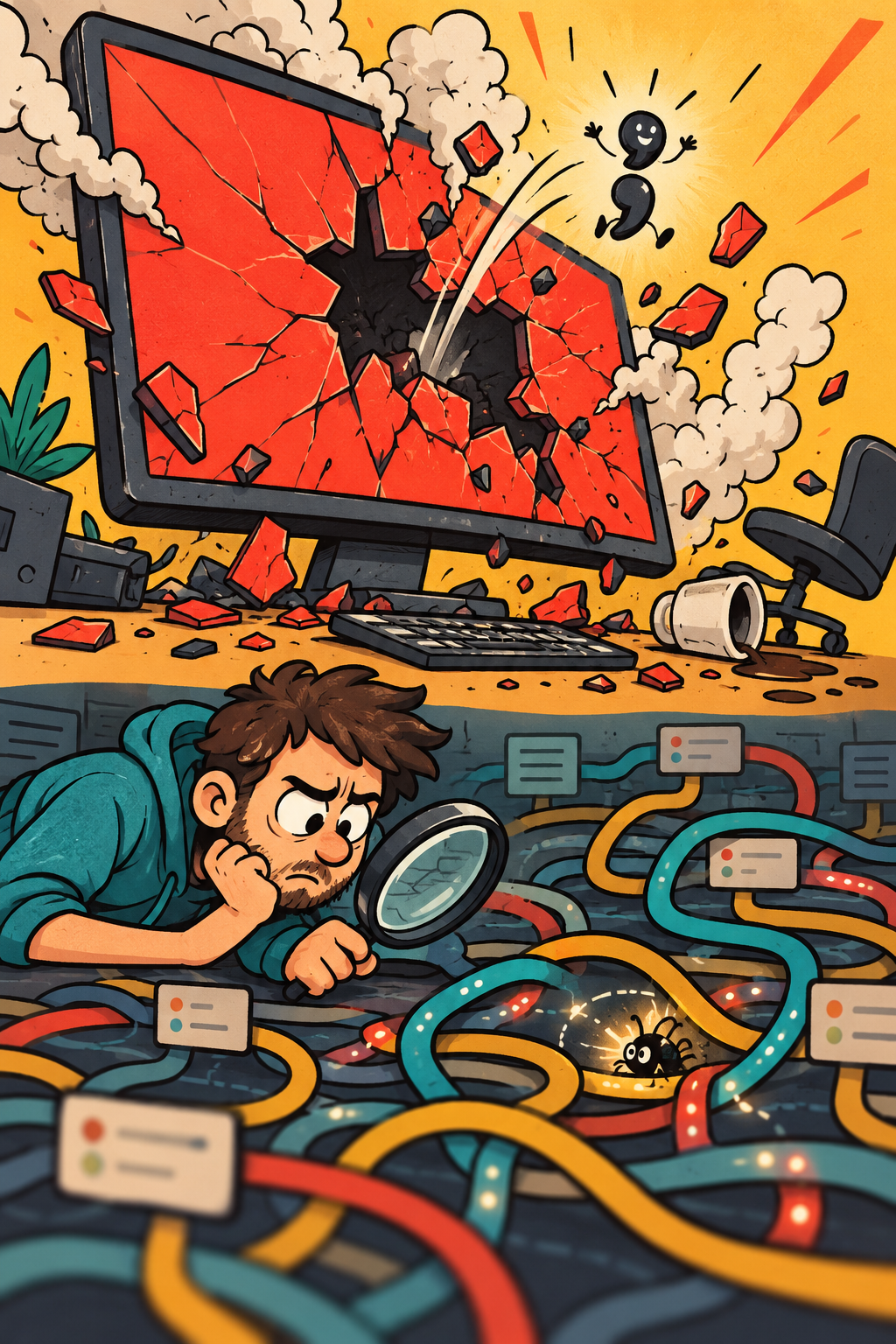
} }Imagine deploying a page and getting a wall of errors—or no page at all. Maybe there’s a stray semicolon, a bad import, or a configuration value that’s plainly wrong. It’s disruptive, but the failure is loud. The broken thing is easy to point at, the error is repeatable, and the path to a fix is usually short: find the cause, change it, deploy again.
The smaller failures can be much harder.
An error appears only now and then. A method fails for one account, with one combination of settings, or only when two requests arrive in a particular order. It works on your machine. It disappears when you add logging. The report says “sometimes,” and the steps to reproduce it are a shrug.
Now the work is less about typing the fix and more about discovering what’s actually happening. You need the right context, useful logs, a reliable way to reproduce the issue, and enough patience to separate the cause from coincidence. A one-line change may eventually solve it—but finding that line can take days.
That’s why failure size and fix difficulty don’t always track together. A catastrophic, deterministic failure gives you a clear signal. A minor, intermittent one can hide across layers of code, data, timing, and environment. The blast radius tells you how much is broken; it doesn’t tell you how easy the bug is to understand.
Good developer experience helps make the quiet failures less mysterious. Clear error messages, meaningful logs, observable systems, and small, dependable repro cases turn “it happens sometimes” into something a developer can investigate. Those tools don’t prevent every bug. They shorten the distance between seeing a failure and understanding it.
The bigger the failure, the easier the fix—sometimes. The harder test is making the small, elusive failures visible before they drain everyone’s time.
The bigger the failure, the easier the fix.
The harder test is making the small, elusive failures visible before they drain everyone’s time.
Page updated: 2026-10-14